- KR





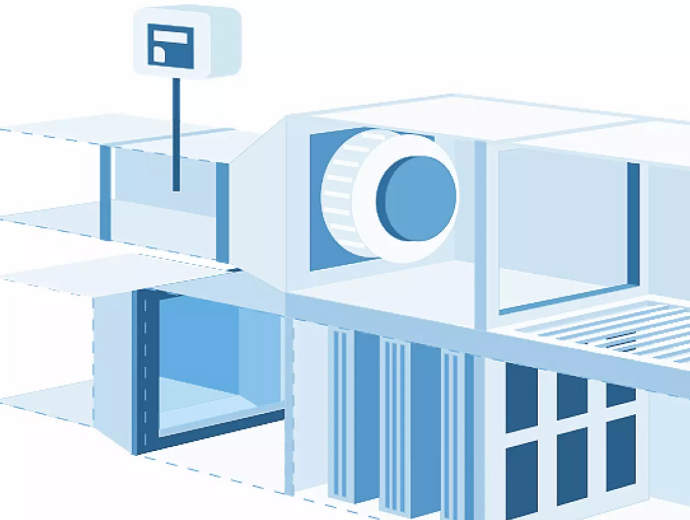
Ventilation systems in sensitive environments must be constantly monitored
to ensure optimal management of indoor air. This monitoring consists of
preventing and detecting breakdowns and poor functioning of air conditioning
within a building. Measuring instruments also make it possible to regulate the
entire ventilation system of a building in real time, room by room.
This type of application uses multifunctional sensor-transmitters, or those
specialized in measuring a particular parameter.
This regulation is therefore part of the overall building management system
(Building Management System or BMS). It also operates a computer network
for data acquisition, control and automatic regulation (Supervisory Control
and Data Acquisition systems, SCADA). This type of IT structure also makes
it possible to optimize the energy consumption of the building, by studying
the data collected by our measuring instruments.
This is why Sauermann transmitters benefit from open connectivity, with
standard outputs, both analog and digital. They are designed to provide
maximum flexibility in the topology, structure and configuration of the building management system.
Objective: non-stop and uninterrupted regulation of air parameters, for
perfect management of indoor air and preventive maintenance of the
aeraulic system.
Raising awareness of indoor air quality has become one of the pillars of the
development of the HVACR industry. The impact of the design, control and
maintenance of HVAC systems on the health and well-being of each
individual is known. It also has a direct influence on energy efficiency.
Creating the best indoor air conditions by following specific guidelines is
the primary goal of regulations such as ANSI/ASHRAE 62.1. Through a set
of specific engineering procedures and methods, ANSI/ASHRAE 62.1
provides the tools necessary for the design and management of VAC
systems in non-residential buildings, in order to guarantee optimal air quality.
Continuous analysis of key air parameters through measurements is
an essential element to succeeding in this important challenge. Sauermann
instruments were designed to help you achieve this goal.
Sauermann's multifunction sensor transmitters
are excellent for the simultaneous measurement
of differential pressure and psychometric
parameters in several scenarios in the VAC sector.
These high-end instruments offer foolproof reliability for constant, long-term
operation.
Differential pressure measurement is particularly
crucial in buildings, because it allows the air
filters of the ventilation network to be
monitored. Some of these filters are HEPA or
ULPA type, to eliminate airborne micro and nano
particles, including bacteria and viruses. They
clog more quickly as their filtering power is high,
which requires constant monitoring to better
anticipate their replacement. This type of
multifunction measuring instrument can also
receive one or more additional probes, to monitor
additional parameters (atmospheric pressure,
temperature/hygrometry, speed/flow, and CO,
CO2 or VOC levels).
Temperature and relative humidity parameters are
the main indicators of the quality of the indoor
climate of a building. They affect both the health
of occupants and the preservation of products in
storage spaces. The regulation of these
parameters is therefore essential for questions of
health, quality, but also economics. Because the
regulation of these two parameters is the basis of
the energy optimization required by the latest
ecological regulations. It also makes it possible to
detect possible weaknesses in the insulation of a
structure.
For 45 years, Sauermann has been supplying
temperature and humidity sensors whose
reliability is certified ex-factory in our French
laboratories, accredited ISO 17025:2017 for these
two parameters. Sauermann's expertise supports
many establishments in regulating their indoor
air: factories, warehouses, museums, schools,
hospitals, offices, etc.
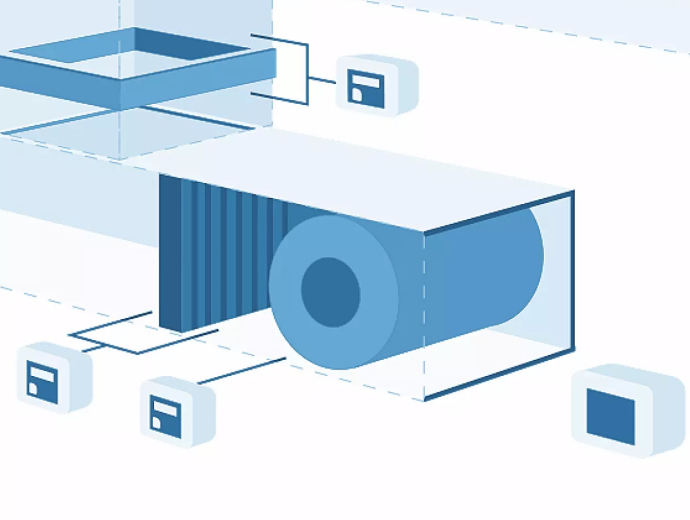
Differential pressure measurement is primarily
intended for monitoring the proper functioning of
air handling units (AHUs). It is especially
concentrated at the level of air filters and ducts,
where the differential pressure allows the flow
rate of air flows to be calculated.
The filters integrated into the AHUs become
clogged more or less quickly depending on their
filtering power. Constant monitoring is
particularly essential for HEPA and ULPA
antibacterial filters.
Measuring the differential pressure before and
after a filter makes it possible to assess its
clogging and anticipate its replacement as part
of a preventive maintenance plan. This
anticipation consists of scheduling maintenance
interventions at the right time, so as to reduce or
avoid downtime.
Historically specialized in pressure
measurement, Sauermann offers all possible
solutions in the field: connected digital pressure
gauges or liquid column pressure gauges. The
first digital solution allows values to be recorded
over time and remotely, with an audible and
visual alarm, and an integrated display on certain
models. The second analog solution is
particularly resilient because it is completely
autonomous: it does not require energy to
operate, and benefits from record durability.
In the field of air conditioning, monitoring air
speed and flow is essential to verify proper air
circulation within a building. This measurement is
particularly important to check that the air
renewal rate is sufficient in the different areas
concerned.
Air renewal makes it possible to maintain rooms
in a constant climate, in particular to compensate
for the heat production of certain equipment
(machines, power supplies, microcomputers,
etc.). The evacuation of cold, or of chemical
substances released by certain products is just
as important, depending on the places
concerned.
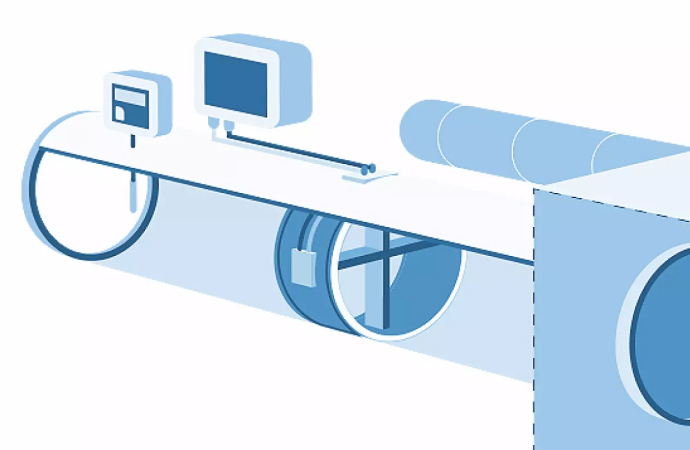
This is why Sauermann offers very advanced
solutions for monitoring and recording the speed
and flow of air in ventilation ducts, both inlet and
exhaust. To calculate in real time the volumes of
air exchanged in ventilated zones, Sauermann
offers a recognized solution: DEBIMO wings.
The concentration of CO2 in indoor air is the
preferred indicator of indoor air quality and
therefore of the air change rate (Air Change Rate
or ACR). It is therefore a measure of choice for
evaluating the overall and final efficiency of a
building's air conditioning system.
CO2 concentration is measured quickly and in
real time, but requires high-end CO2 sensors to
provide reliable results. Sauermann uses the
most reliable technology in the field, with NDIR
(non-dispersive infrared) sensors, and
instruments calibrated internally within the
company's laboratories.
Today, measuring CO2 levels is no longer just
reserved for the most sensitive buildings. It is
strongly recommended in all places open to the
public, particularly schools and offices. A CO2
level of 800 to 1000 ppm is currently
the subject of a scientific consensus to
demonstrate sufficient air renewal to reduce the
concentration of bacteria and viruses in
suspension, in order to mitigate the risks of
biological contamination.
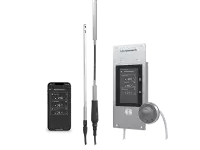
Sauermann의 Si-CPE320은 KIMO CPE 310의 진화된 모델입니다. 이 트랜스미터는 클린룸 환경에 최적화되어 작업 환경을 방해하지 않는 세련된 디자인의 매립형 설치 제품 입니다. 고급 스테인레스 스틸 방수 전면 패널과 통합된 터치 스크린을 갖추고 있어 사용자 편의성을 높였습니다. Si-C320과 동일한 고급 기술을 채택하여 최신의 신뢰성과 정확성을 제공하며, 측정 데이터는 Sauermann Control 애플리케이션/소프트웨어를 통해 효과적으로 기록하고 다운로드할 수 있습니다. Si-CPE320: 무선 통신 모듈(옵션) Si-CPE320-W: 통합형 무선 통신 모듈
Read More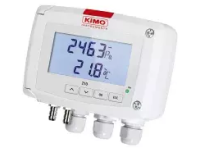
KIMO CP 210-R 설치형 차압 트랜스미터 입니다. 압력 ±100Pa, ±1000Pa, ±10000Pa 차압 및 온도 2개의 측정값을 디스플레이 할 수 있으며, 클린룸, 병원, 제약 등 다양한 산업 환경 분야에 적용됩니다. SQR/3 옵션을 추가하여 피토관 또는 데비모 블레이드 등을 연결하여 풍속/풍량 값을 측정합니다. 측정범위: - CP211: -100 ~ +100 Pa - CP212: -1,000 ~ +1,000 Pa - CP213: -10,000 ~ +10,000 Pa
Read More
KIMO의 TH 110은 습도와 온도를 측정하는 설치형 트랜스미터 입니다. 상대습도의 측정범위는 5 ~ 95 %RH이며, 온도의 측정범위는 표준형과 대기형 모델은 0 ~ +50 °C, 덕트형과 프로브형 모델은 -20 ~ +80 °C 입니다. 간편한 사용법과 함께 안정적인 성능을 자랑하며, 사용자가 쉽게 데이터를 수집하고 모니터링 할 수 있도록 지원합니다.
Read More
KIMO의 TH 210-R은 습도와 온도를 측정하는 설치형 트랜스미터 입니다. 상대습도의 측정범위는 모델 종류에 관계없이 0 ~ 100 %RH 로 동일하며, 온도의 측정범위는 대기형 모델과 폴리카보네이트 프로브형 모델은 -20 ~ +80 °C, 스테인레스스틸 프로브형 모델은 -40 ~ +180 °C 입니다. 다양한 산업 및 연구 환경에서 신뢰성 있는 데이터를 제공하여 프로세스 모니터링과 실험실 작업에 필수적인 역할을 합니다.
Read More
KIMO의 TM 110은 설치형 온도 트랜스미터 입니다. 온도 0 ~ 50 °C, -20 ~ 80 °C, -100 ~ 400 °C 대기 및 기밀형 모델로 0 ~ +50 °C, 덕트형 모델로 -20 ~ +80 °C, Pt100 터미널 블록형 모델로 -100 ~ +400 °C 측정합니다.
Read More
KIMO의 PST는 측정하고, 소리 및 시각 알람, 접점 신호를 발생시키는 설치형 스위치 입니다. 압력 ±100 Pa, ~±2,000 mbar, 접점 RCR relay output 설정 압력 범위에서 전기적 접점을 활성화합니다.
Read More
KIMO CP110 시리즈 설치형 차압 트랜스미터 입니다. CP111 / 112 / 113 : -100/+100 Pa ~ -10,000 / +10,000 Pa 측정 CP114 / 115 : -500/+500 mbar ~ -2,000/+2,000 mbar 측정
Read More
KIMO의 경사형 액주형 마노미터 MG는 밀도 0.87인 AWS.10 시약을 사용합니다. 공기 또는 가스의 압력, 감압, 차압의 미세한 변화를 측정합니다.
Read More
KIMO의 수직 액주형 마노미터 TJ 시리즈는 범위 내의 공기 및 가스의 압력, 감압 또는 차압의 변화를 측정합니다. (AWS.10 또는 VOLT.1S 등 사용되는 마노미터 시약에 따라 달라집니다.)
Read More
CP 25 경사형 액주 마노미터는 공기 또는 가스의 미세한 압력 변화, 감소 또는 차압을 측정합니다. 도장 부스의 필터 막힘을 확인하는 데 특별히 설계되었습니다.
Read More
KIMO의 CTV 110은 풍속과 온도를 측정하는 설치형 열선 풍속 트랜스미터 입니다. 측정범위는 0 ~ 30 m/s, 0 ~ 50 °C의 풍속과 온도를 측정합니다. HVAC 시스템, 클린룸, 산업 공정 모니터링 등 다양한 응용 분야에서 중요한 역할을 합니다.
Read More
KIMO의 CO 110은 CO(일산화탄소)를 측정하는 설치형 트랜스미터 입니다. CO센서(전기화학 센서)를 통해 무색/무취의 일산화탄소를 측정할 수 있습니다.
Read More
KIMO의 압력 측정모듈은 두 개의 압력 입력과 한 개의 써머커플 입력으로 구성됩니다. 5가지 모델이 사용 가능합니다.
Read More