- KR





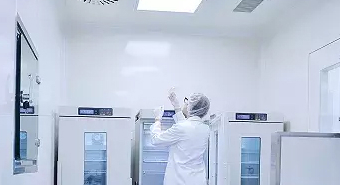
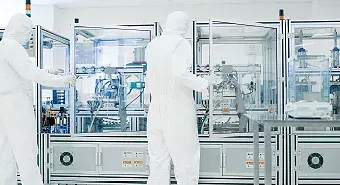
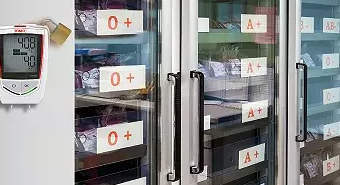
Clean rooms require flawless management of their indoor air in order to avoid any contamination. This is why for 45 years, Sauermann has devoted
the best of its research and development to these sensitive environments, subject to the most drastic standards.
Objective: to offer first-rate manufacturing quality and service to professionals in the sector.
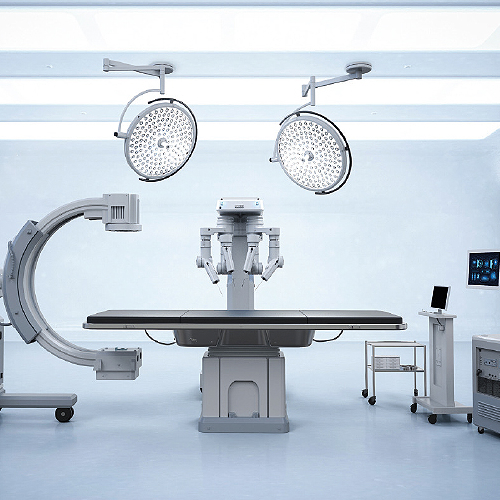
Control of aeraulic systems is essential in all sectors whose activity
can be disrupted by airborne particles such as dust, bacteria, viruses,
microparticles or aerosols. Sauermann therefore works with all relevant
professionals: from advanced electronics to pharmaceuticals, including
aerospace, hospitals, and biotechnologies.
Sauermann mobilizes all of its metrological skills to ensure compliance
with standards within clean rooms: from constant monitoring to spot checks,
including air balancing, calibration, testing and repair of instruments for all
air parameters: pressure, hygrometry, temperature, flow, speed, CO2 rate, etc.
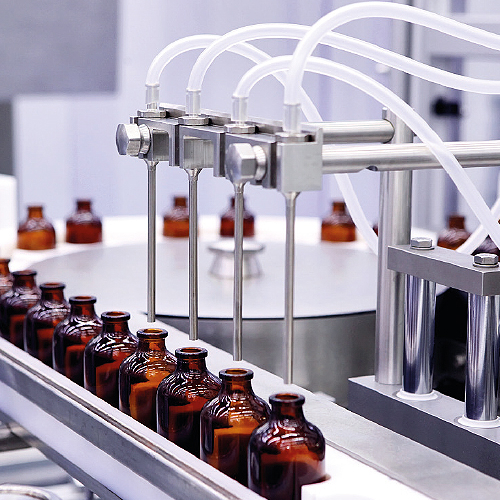
Environmentally controlled buildings require very high-end, certified and
extremely reliable monitoring and control instruments.
Sauermann has its own factories, ISO 17025:2017 accredited laboratories
for humidity and temperature in Montpon, and on-site technicians to ensure
this level of expertise, all consolidated by 45 years of experience in
metrology. Enough to provide perfect measuring equipment, and above
all ensure long-term monitoring.
Initial qualifications and requalifications of clean rooms are subject to
stringent standards, compliance with which must be certified by
state-of-the-art measuring instruments. These GxP quality and traceability
regulations involve recording the conditions under which activities are
carried out, in compliance with Good Manufacturing Practices (GMP).
| EN ISO 14644-1 |
Maximum permitted concentration (Particle per m2 ) | |||||
|---|---|---|---|---|---|---|
| Class | ≥ 0.1 μm | ≥ 0.2 μm | ≥ 0.3 μm | ≥ 0.5 μm | ≥ 1.0 μm | ≥ 1.0 μm |
| ISO 1 | 10 | |||||
| ISO 2 | 100 | 24 | 10 | |||
| ISO 3 | 1000 | 237 | 102 | 35 | ||
| ISO 4 | 10000 | 2370 | 1020 | 352 | 83 | |
| ISO 5 | 100000 | 23700 | 10200 | 3520 | 832 | |
| ISO 6 | 1000000 | 237000 | 102000 | 35200 | 8320 | 293 |
| ISO 7 | 352000 | 83200 | 2930 | |||
| ISO 8 | 3520000 | 832000 | 29300 | |||
| ISO 9 | 35200000 | 8320000 | 293000 | |||
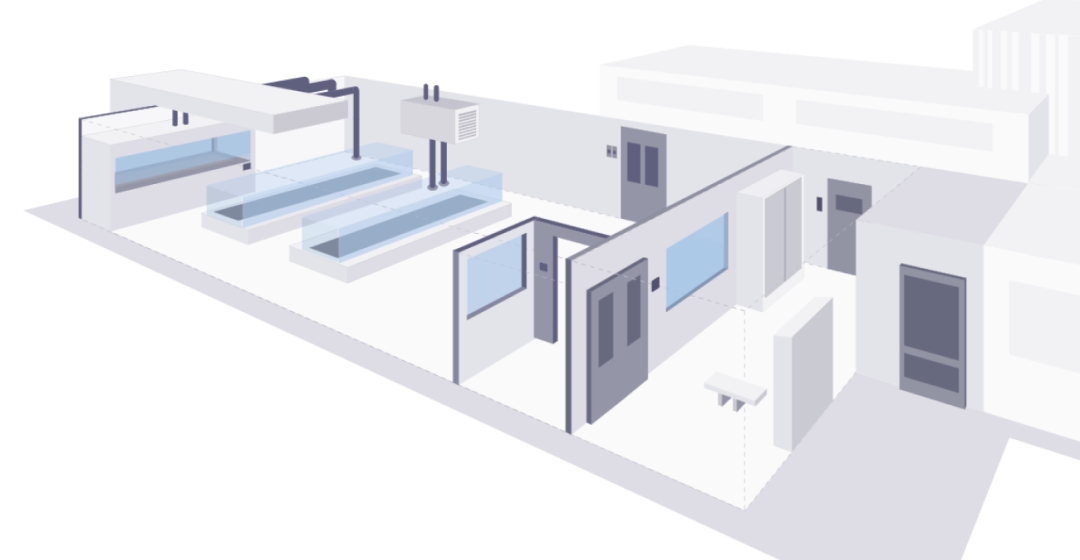
Clean room monitoring and control measures rely on very fine values, particularly for differential pressures. Each room must be maintained at very slight
overpressure or underpressure in order to avoid any risk of atmospheric contamination. The measurement accuracy and resolution of Sauermann
instruments are specifically designed to address these concerns.
The air change rate (TRA) is the rate at which all of the air inside a room is replaced
by the ventilation system. It is calculated as the air flow of each inlet of the ventilation system in relation to the total volume of the room in question,
and is expressed per hour.
Mathematically, the TRA is expressed by this simple equation:
ACH = Q/Vb
ACH = number of air changes per hour
Q = air flow
V = space volume
In cleanrooms rated ISO 5 and above, airflow velocity is used rather than TRA to specify unidirectional airflow.
Between adjacent clean rooms or clean areas of different cleanliness levels, the pressure differential must typically be within a range of 5 Pa to 20 Pa,
in order to allow doors to open and avoid unintentional cross-flows. due to turbulence.
Source: ISO 14644-4; Clean rooms and related controlled environments - Part 4: Design, construction and operation